Practise vocabulary aloud
Listen. Recall. Repeat.
Start with a small set of useful words. Listen to the answer, hide it, then say the translation from memory. Check what you said and give the difficult words another turn.
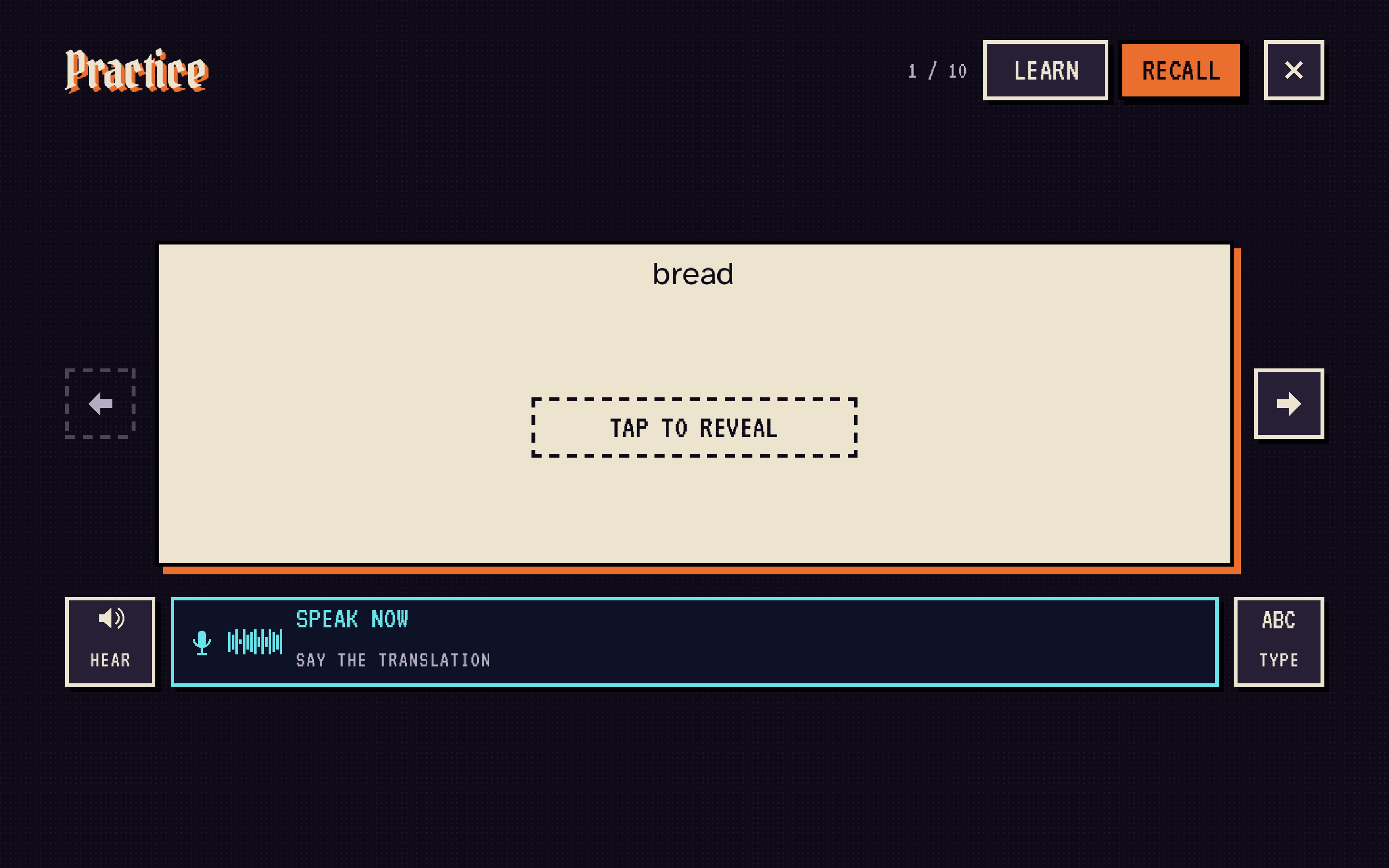
A small routine you can repeat
You can do this with paper cards and a pronunciation recording, or in Word Crypt. Pick two languages: one you already understand for the prompts, and one you want to practise for your answers.
Listen with the meaning in view
Choose a small set on one topic, such as the ten body words below. Read each prompt and its translation, then listen to the translation. Say it back once while it is still visible. For nouns, keep the article with the word: das Auge, rather than just Auge.
Hide the answer and recall it
Cover the translation or turn the card over. Look at the prompt and say the answer in the language you are learning. Give yourself a moment to try before looking. If you are learning English from French, la tête is your prompt and head is your answer.
Check, listen and try again
Reveal the answer and compare it with what you said. If you missed it, listen again, say the correct word, then come back to it after another card. A correction is useful information about what to practise next.
Mix the order and return later
Shuffle your cards so the order does not give you the answer. Keep a word in the set after you get it right once. Try the set again later or the next day, then decide whether to add a few new words.
Try ten useful body words
Choose a language you know and one you want to practise. Start in Learn, listen to a word, then switch to Recall to hide its translation. Say it aloud before revealing the answer.
Listen and say the word. Then hide the answer and try from memory.
Say the answer aloud and check it yourself. This exercise does not record or assess your voice. The recordings and words come from Word Crypt.
The interactive exercise needs JavaScript. You can still practise with the ten body words below: choose two columns, cover the learning-language answers and say each translation before checking it.
| English | German | French | Italian | Spanish |
|---|---|---|---|---|
| head | der Kopf | la tête | la testa | la cabeza |
| eye | das Auge | l'œil | l'occhio | el ojo |
| ear | das Ohr | l'oreille | l'orecchio | la oreja |
| nose | die Nase | le nez | il naso | la nariz |
| mouth | der Mund | la bouche | la bocca | la boca |
| arm | der Arm | le bras | il braccio | el brazo |
| hand | die Hand | la main | la mano | la mano |
| leg | das Bein | la jambe | la gamba | la pierna |
| knee | das Knie | le genou | il ginocchio | la rodilla |
| foot | der Fuß | le pied | il piede | el pie |
Why hide the answer?
Reading a translation and producing it from memory are different tasks. Hiding the answer gives you a way to check whether you can retrieve the word when it is not already on the screen.
In a study of foreign-language word pairs, Karpicke and Roediger found that repeated retrieval improved later recall more than further study after a word had first been learned. That supports including recall attempts in a practice routine. It does not establish that speaking is always better than typing, or that any particular app guarantees the same result. Read the study summary: The Critical Importance of Retrieval for Learning (2008).
Saying the answer adds spoken practice to that recall attempt. Use a recording to check how the word sounds, and keep learning through listening, reading and conversation too.
Use the same routine in Word Crypt
Choose your known language and learning language before starting. Your known language supplies the word prompts; you answer in the language you want to learn.
- Start in the preparation room and open the practice book.
- Use Learn to see the translation and hear the word.
- Switch to Recall to hide the answer. Say the translation before using Tap to reveal.
- Check the answer, listen again when needed and retry. Practice has no heart loss or countdown.
- When you are ready, take the stairs into the dungeon.
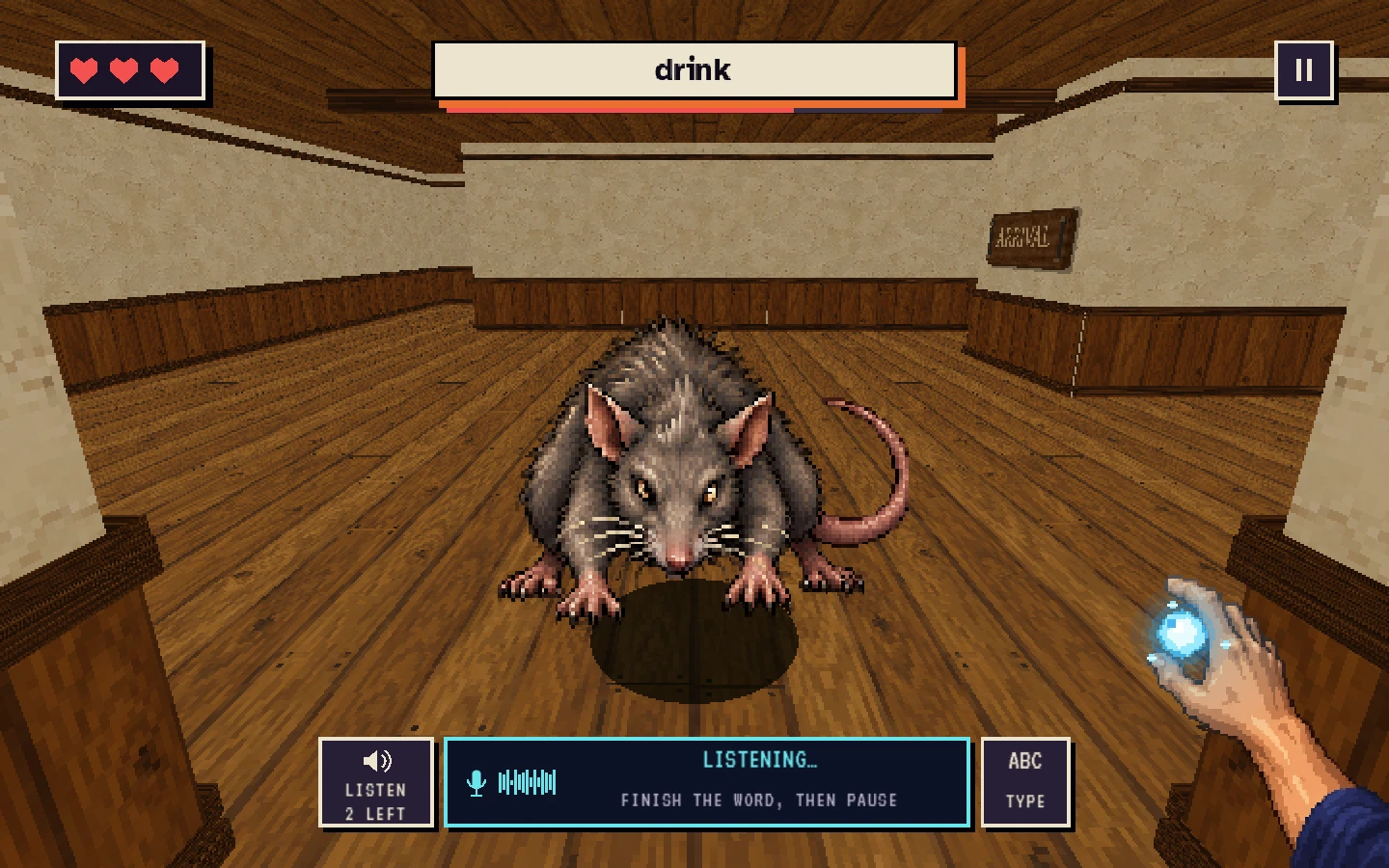
Move from practice to encounters
Dungeon encounters ask you to recall translations while facing an enemy. A wrong answer costs a heart. If the countdown runs out, you also lose a heart. You can adjust the thinking time, or turn off the countdown, in Settings → Gameplay.
You have two listens per floor during encounters. In practice, when reviewing a missed word and at the exit recap, listening is unlimited. Use the preparation room to get familiar with the words before taking them into a fight.
Found words stay in your Spellbook. Return to them to hear their pronunciation and check your learning progress. See how practice and the Spellbook fit into the game.
When you get stuck
You recognise the answer but cannot say it yet
Keep the set small. Listen, say the word with the answer visible, then hide it and try again after a different word. Wait to add more words until this set feels manageable.
You cannot speak where you are
Type the translation from memory instead. In Word Crypt, you can switch between speaking and typing in practice and encounters. Return to spoken practice when it suits your surroundings.
The microphone does not accept your answer
Check that the selected learning language matches the word you are saying, and wait for Speak now. Listen to the example and retry, or use typing. A speech-recognition result is not a detailed assessment of your accent. See speech-recognition help.